
On this page
DIRECT ANSWER
Five humans, and the townspeople are not among them
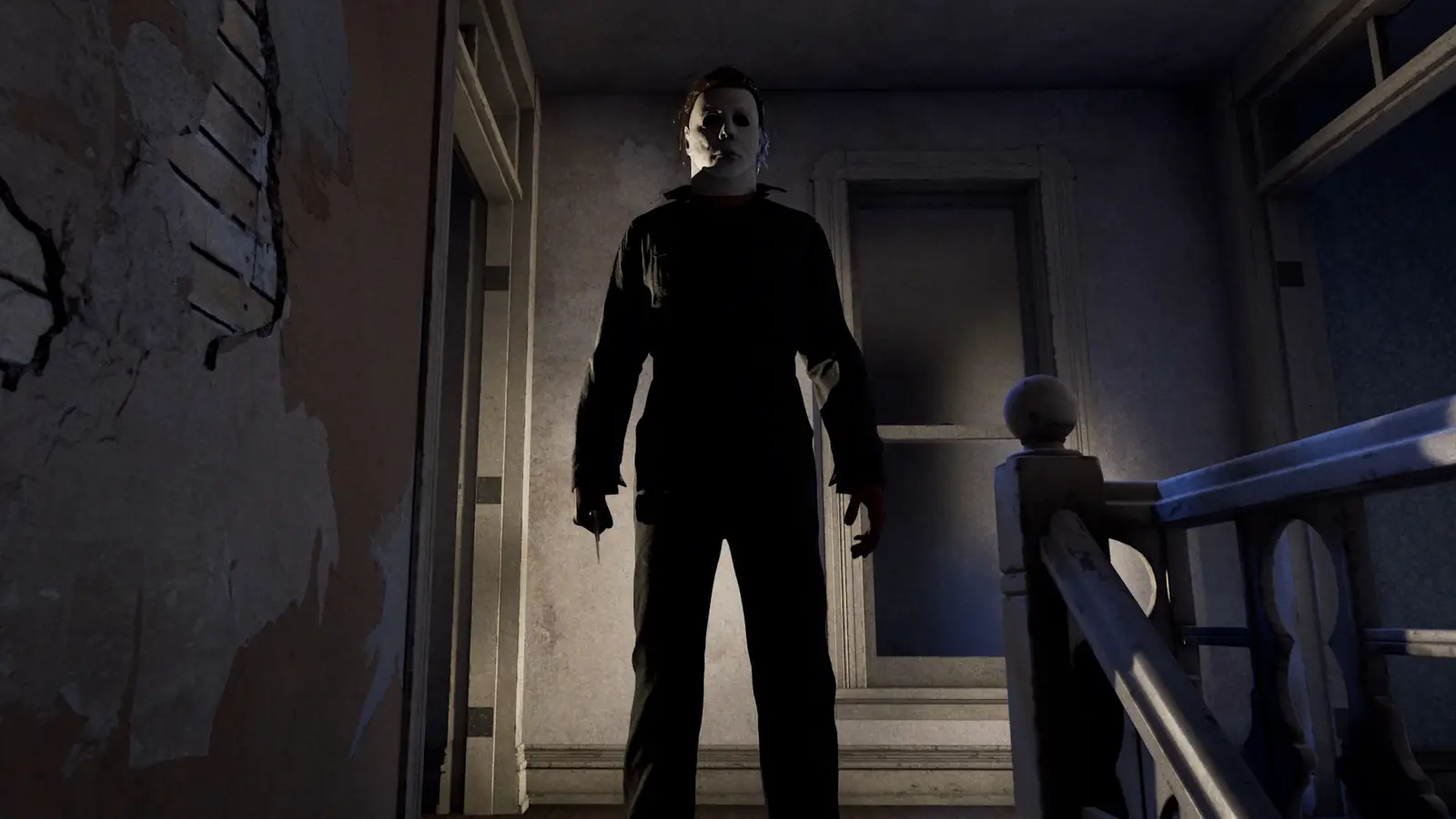
The residents are not other players
This is the single detail that reframes a first match. Four humans play civilians, but the map also holds NPC residents who have no idea what is happening.
Civilians have to find those residents, convince them the threat is real, and then guide them out.
Do not confuse those residents with the four human teammates: they are people your team is trying to protect. The residents are the objective.
| Role | Who controls it? | What to understand |
|---|---|---|
| Michael Myers | One player | Hunts residents and Special Targets |
| Civilians | Four players | Try to protect residents and escape |
| Resident NPCs | The game | Can be persuaded, guided or asked to help |
What a convinced resident will do for you
Persuasion is not just a step toward the exit. A resident who believes you opens up a small set of requests, and choosing between them is most of the civilian decision-making early on. Each option trades safety for tempo in a different direction.
- Place an additional call to the police
- Take a secure hiding place and stay put
- Follow you as company while you keep moving
Starting an escape alerts Michael
The official overview specifically says that initiating an escape sequence makes noise and reveals your exact location to Michael.
Plan the escape around the items you have found, and expect Michael to know where that escape is starting.

How Michael actually finds you
Michael is not simply faster. His toolkit is built around narrowing a search and then closing it, and each piece behaves differently.
Killer Sense is a first-person read on the surroundings that builds Stalk levels, which in turn open tracking and execution options.
Shape Jump moves him unseen through darkness and raises his base speed, but he can only enter and exit in shadow or outside a resident line of sight — which is why lighting is contested.
Shape Dash lunges forward out of a Shape Jump.
On top of that he can cut lights and power outright and trigger temporary blackouts, manufacturing the darkness his own movement depends on.
- Killer Sense — situational read that accumulates Stalk
- Shape Jump — unseen movement, darkness or out of sight only
- Shape Dash — forward lunge available from a Shape Jump
- Environmental control — lights, power, and induced blackouts
Two ways the civilians can win
The obvious win is evacuation: get rescued residents to an escape route before time runs out.
The second is less advertised and needs the right equipment plus enough people — Michael can be detained and shipped off to Smith’s Grove Sanitarium. Treat that as a situational outcome rather than a plan you open with; it asks for coordination a first match rarely has.
Michael, for his part, is rewarded more for eliminating priority targets, so being marked changes how much attention you should expect.
What is different every match
Three things are placed fresh each time: lootable containers and weapons, the escape routes themselves, and the points of interest that reveal where residents and hiding places are. That randomisation is deliberate and it means route memorisation transfers poorly between matches.
What does transfer is the order of operations — locate residents, convince them, decide what to ask for, then move. Guides claiming fixed spawn points for a given map are describing one match, not a rule.
Give your first match one learning target
You do not need to understand every unlock before learning the match. Pick one part of the objective to observe from beginning to end. On the civilian side, that might be finding a resident and deciding what request to make. As Michael, it might be recognizing the target feedback while using Killer Sense and checking whether a planned movement exit is available.
This is a suggested practice routine, not a claim that either action guarantees a win. A clear learning target helps you distinguish a rule you did not understand from a prompt that failed or a route that became unsafe.
After the attempt, name the first step that stopped working. Did you lack information, an item, a qualifying movement position or cooperation? Use that answer to choose the next guide. Changing your character, every loadout option and the whole route after one loss makes it harder to learn which part mattered.
- Choose one objective or mechanic before the match.
- Watch the current prompt and conditions rather than copying an old video’s buttons.
- Separate a failed plan from a missing or malfunctioning interface prompt.
- Use the role guide for mechanics and the patch record for a reproducible technical fault.
Frequently asked questions
Can I practise without other players?
Private matches against AI exist, and there is a separate six-chapter single-player story mode. The developer overview names both but does not detail how the private AI behaves, so treat it as practice for orientation rather than for reading real opponents.
Do I need a specific civilian to be useful?
The official overview confirms distinct civilian stats and traits, and the progression post explains Athleticism, Personality, Resourcefulness and Capability. Those categories describe different strengths, but they do not establish a tested ranking of the roster. Use the current character screen to compare the choices available to you.
Why do my controls not match a video I watched?
Much of the circulating footage predates release. Exact inputs and interface details should be checked against the build you are running rather than against pre-launch overviews.