
Halloween: The Game Guides
What each side is trying to do, how Michael tracks, and how civilians move residents to an exit before the clock runs out.

What each side is trying to do, how Michael tracks, and how civilians move residents to an exit before the clock runs out.
GUIDE LIBRARY
Michael’s starting tools find targets and change his approach. Learn the conditions before treating Shape Jump as an unrestricted teleport.

Your teammates and the people you rescue are different groups. Build an escape around the residents, resources and routes in the match you are playing.

Prepare the exit, persuade the resident, then coordinate the escort. Use the live interaction prompt to decide which supplies are actually needed.
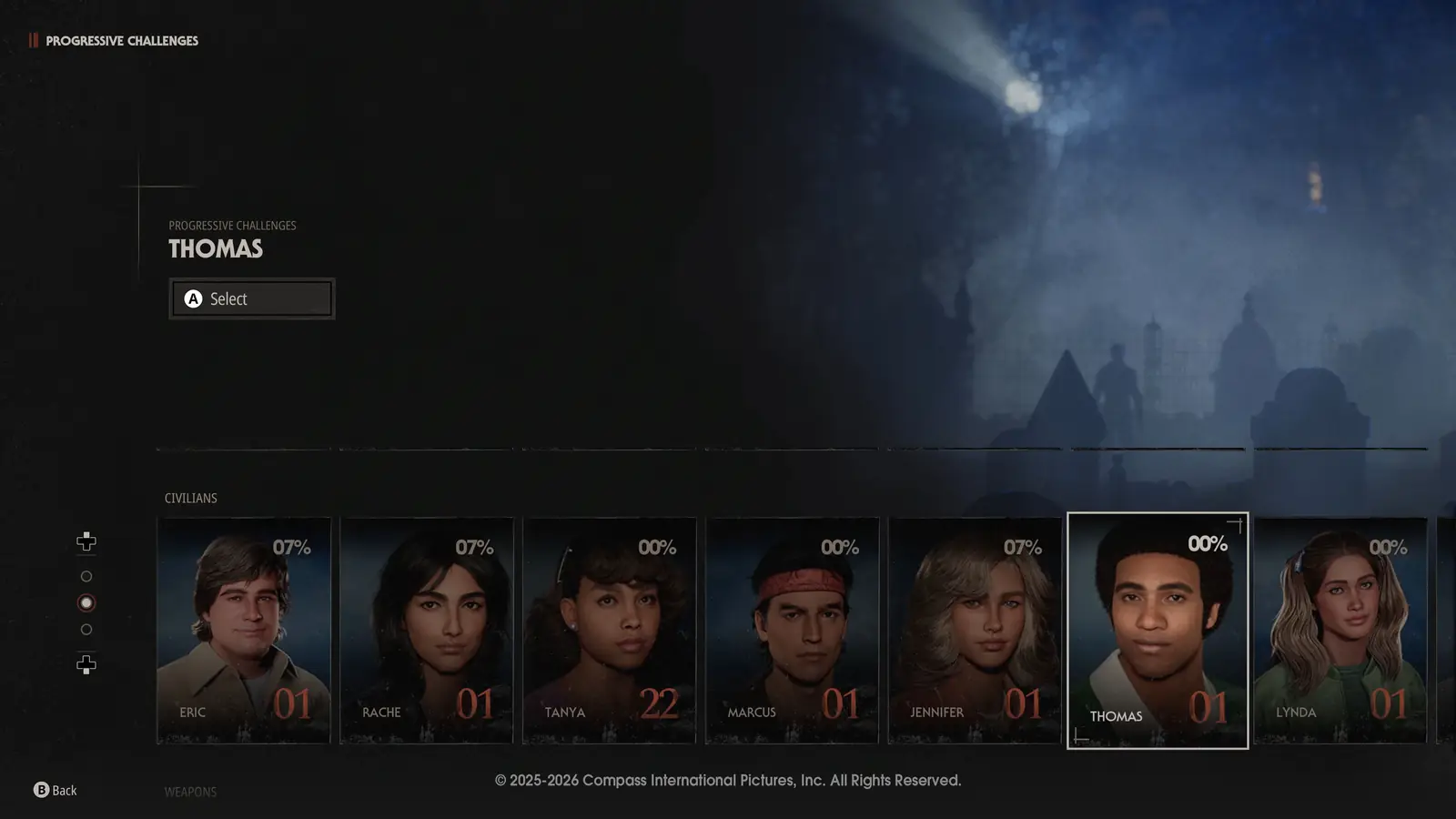
Profile, killer, civilian and weapon progression are separate. Perk Points are another system, and a card upgrade can expire after a limited number of matches.
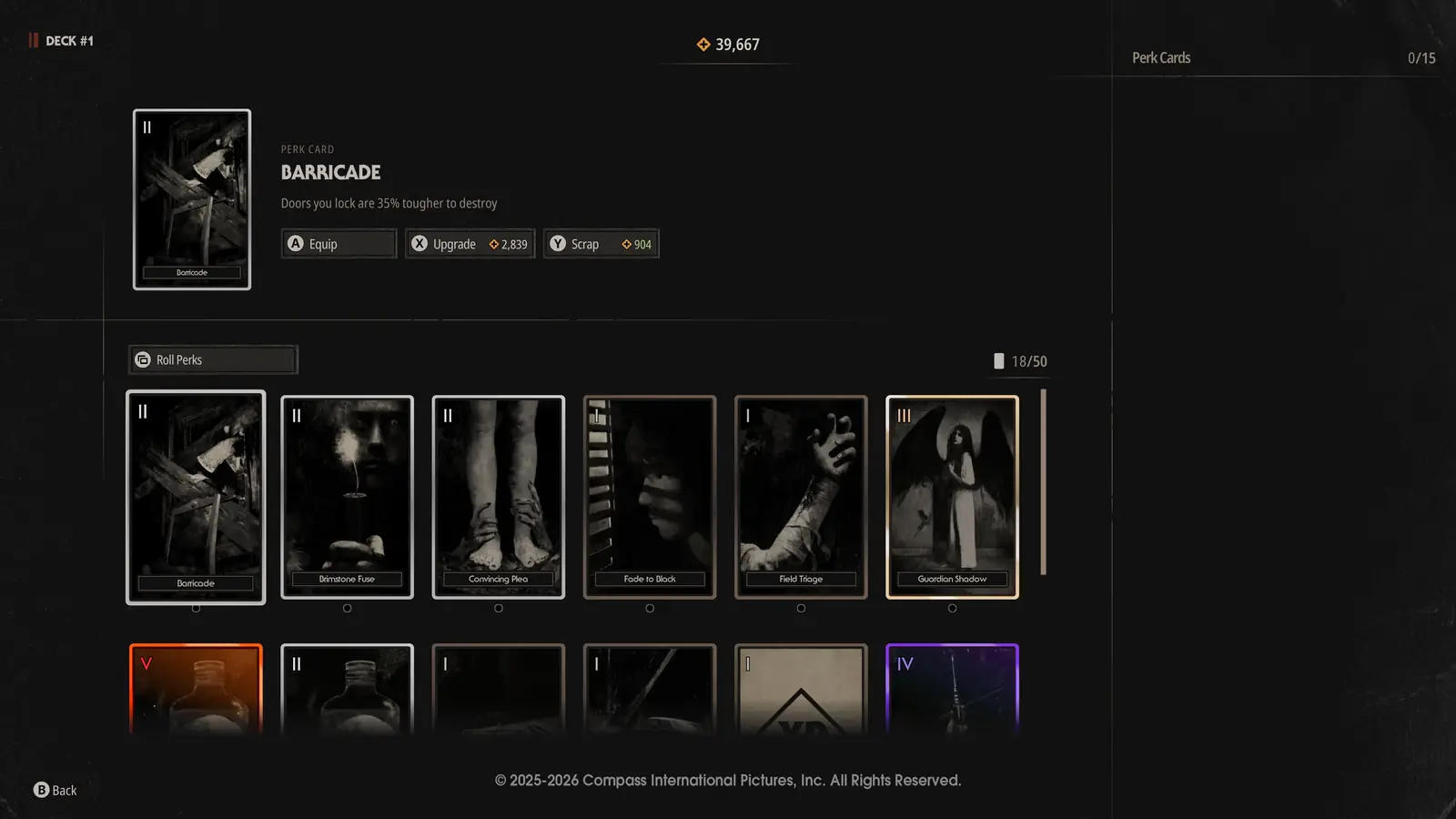
Perk Points buy card rolls, cards build into a deck you equip to a civilian, and points can also raise a card’s level for a limited run of matches.
Online 1v4, private matches against AI and Michael’s single-player story are distinct options. Crossplay capability is not the same as shared progression.
One player is Michael, four are civilians, and the residents wandering the map are neither. Knowing which is which decides your first match.
Start with the beginner guide if you are still sorting out who is human and what the two teams want. It explains the whole match before asking you to commit to a character or a loadout. The role guides then separate Michael’s pursuit from the civilian rescue sequence.
If you understand the match but a particular ability seems unavailable, open the Michael guide and check its conditions. If you keep finding residents without finishing an escape, open the civilian guide and review the preparation between persuasion and departure. A progression question belongs with levels and perk cards rather than with the basic win condition.
The directory above is organized around those decisions. It deliberately keeps rescue and escape together, and progression with perk cards, so closely related questions do not send you through several pages that repeat the same introduction.
A rule tells you what the game permits. Match information tells you what is happening now. A strategy tells you how to use both. Keeping those separate is useful when a guide sounds more certain than its evidence.
For example, Shape Jump has published conditions involving darkness or resident sight. Whether your current position satisfies the game’s check is a live situation. Choosing a route through that position is a strategy. The official rule supports the first claim without proving every route suggestion.
Our role pages identify published mechanics and label editorial practice routines as such. They do not claim that a route, build or timing was tested when the available evidence is a written developer overview.
| Claim type | Example | Useful evidence |
|---|---|---|
| Mechanic | Shape Jump restricts entry and exit. | The official ability description. |
| Current match state | An escape is available at a location. | What this match reveals. |
| Strategy | A chosen route is efficient or safe. | Repeated attempts under stated conditions. |
The official locations overview identifies four launch maps. These names are useful for orientation and for describing a clip or a problem report. They do not establish fixed resource coordinates. The multiplayer rules separately describe randomization in resources and escape opportunities.
A recognizable film house can be a good callout while still being a poor promise of where the next key item will be. Learn where you are, then read the present match for what is useful there. That combination transfers better than a screenshot with an unverified “always spawns here” label.
| Map | Named landmarks |
|---|---|
| East Haddonfield | Phelps Garage and The Rabbit in Red Lounge. |
| Haddonfield Heights | The Strode and Myers houses near Lampkin Lane. |
| Orange Grove Estates | The Doyle and Wallace residences. |
| Haddonfield Town Center | Nichols Hardware, A-Side Music Store and Patty’s Pub. |
Official character profiles introduce familiar figures such as Laurie, Annie, Lynda and Bob, alongside original civilians including Jennifer, Tanya, Rachel, Marcus and Thomas. Their backgrounds help distinguish the cast, but a biography is not a numerical performance comparison.
For actual selection, look at the stats and traits shown by the game and connect them to the job you want to perform. Personality relates to persuasion and police contact; Resourcefulness relates to repairs and equipment. Those category definitions help interpret a loadout without assigning unsupported values to a named character.
Edition availability is another separate question. Richard and Alexis appear in the Deluxe contents. That purchase fact does not establish that they outperform the rest of the roster. Use the edition comparison for entitlements and the civilian guide for the rescue tasks a chosen character needs to perform.
Private matches against AI are mentioned by the developer and can be a useful place to learn the interface. Choose one small question before starting: can you identify the selected objective, recognize the movement condition or distinguish a resident request from an escape trigger?
Keep your comparison narrow. If you change character, equipment, mode and route at once, a different outcome will not tell you which change mattered. A short note about the exact condition you tested is more valuable than declaring a build good or bad after one match.
The multiplayer-and-offline page explains the limits of the evidence about modes. A private AI session is not automatically proof that every mode works disconnected, that all challenge types share eligibility or that progress transfers to another platform.
Sometimes a failed action is not a strategy problem. The first hotfix addresses a missing Michael get-up prompt and some challenge-tracking issues. If your symptom matches one of those, establish your installed version before assuming you misunderstood an ability.
A helpful report includes what you expected, what actually appeared and how to reproduce the difference. “I could not get up after being downed” is a different issue from “I could not enter Shape Jump while observed.” Keeping the action precise prevents a technical fault from becoming a made-up gameplay restriction.
The fixes section starts with this distinction. It does not offer a guaranteed crash cure, an unofficial executable or a save reset as a universal answer.
Review where the plan broke, not merely whether you won. If you were unsure which people needed rescuing, return to the beginner guide. If the problem was preparing and starting an escape, read the civilian sequence. If you lost track of prey or could not use a movement state, revisit Michael’s conditions.
If the match went as expected but an unlock did not appear, compare the relevant progression track and challenge eligibility. Finally, if a counter or prompt clearly malfunctioned, use the patch record. That order keeps mechanical learning, unlock planning and technical troubleshooting from turning into one undifferentiated list of tips.
Exact challenge solutions, full perk-value tables and fixed-point maps are not included here without the necessary objective text or reproducible evidence. The existing guides cover the mechanics that can currently be supported, while leaving room for genuinely new answers when evidence exists.
The beginner guide establishes the 1v4 structure and NPC objectives. Follow it with the guide for the role you intend to play.
The official sources provide character backgrounds and stat categories, not enough measured comparative evidence for a reliable ranking.
No. The landmarks identify places. The multiplayer design randomizes resources and escape locations, so those are separate kinds of information.