
On this page
DIRECT ANSWER
Points buy rolls, rolls build a deck
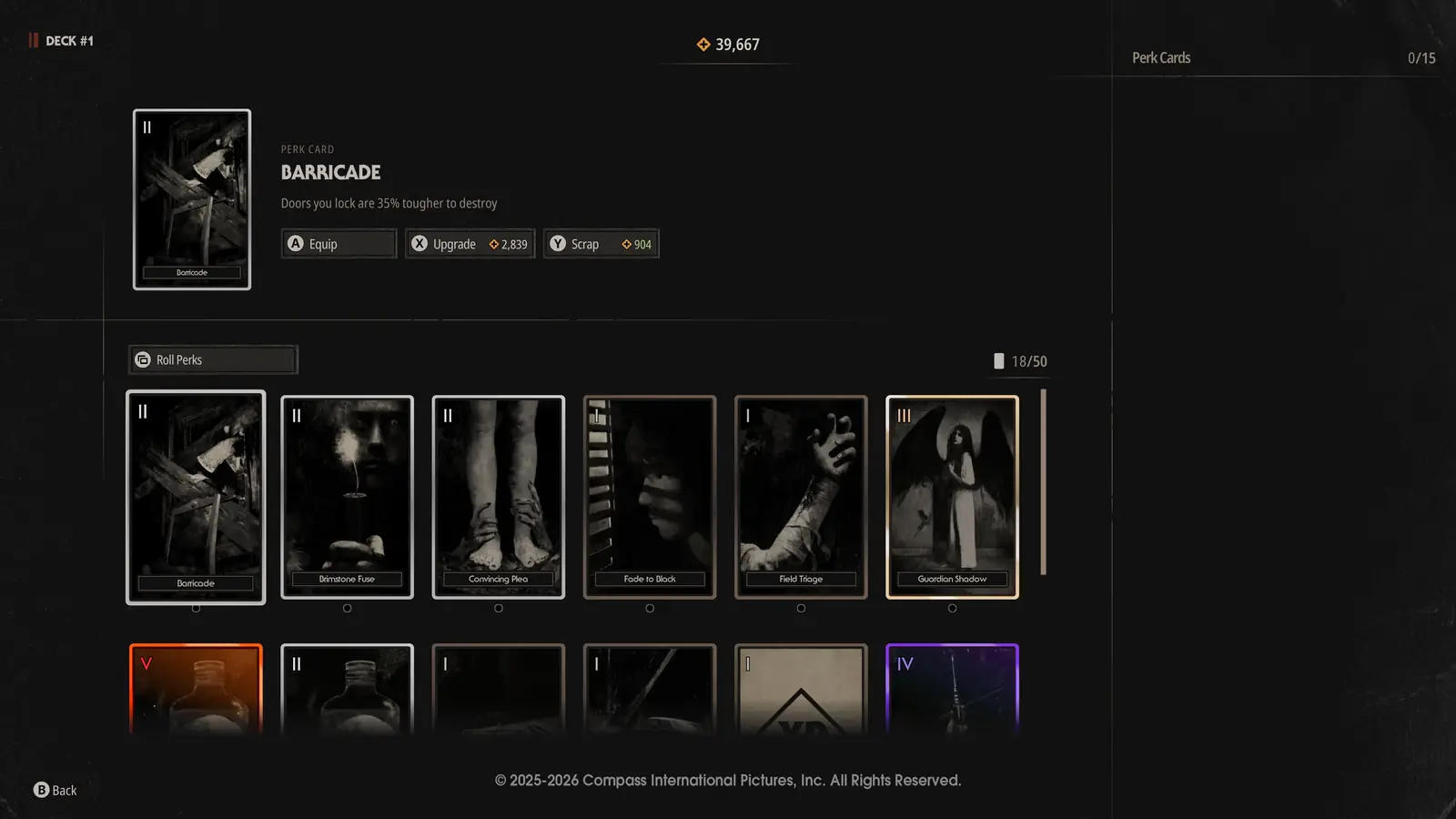
Where to roll and equip civilian perks
Check your Perk Point balance and the displayed cost before rolling. Inspect the resulting card’s actual effect, add useful cards to the deck, then check which deck is equipped to the civilian you intend to play. Owning a card is not the same as putting it into the selected loadout. Do not assume filling a deck activates every card simultaneously during a match.
Start by supporting the task you actually perform, such as protecting an escort or securing a room, rather than spending solely on rarity. Read the card text and any duration displayed by the current build. This is a preparation checklist, not a ranked best-deck recommendation or a claim about hidden draw odds.
The four things you can do with a card
The card screen exposes a small set of actions, and knowing all four stops you hoarding duplicates you will never use. Equipping puts a card into the active deck. Upgrading raises its level for a price. Scrapping converts a card you do not want back into points, which is the part the written developer post does not mention at all and the part that matters most when your collection outgrows your deck. Rolling spends points for a new card at odds you influence by how much you commit.
- Equip — place a card into the active deck
- Upgrade — raise a card’s level, paid in Perk Points
- Scrap — convert an unwanted card back into points
- Roll — spend points for a new card, higher spend improving rarity odds
Rarity is a spend decision, not a drop you wait for
Because the roll odds move with how much you spend, the system rewards deciding in advance whether you are filling gaps or chasing a specific rarity tier. Small rolls broaden a thin collection quickly; large rolls concentrate the same points into fewer, better-odds attempts. Cards display a rarity indicator and the higher tiers are visually distinct in the collection view. What has not been published is the actual odds table, so anyone quoting a percentage for a given spend is inferring it rather than citing the developer.
Deck size is the real constraint
The screenshot shows a deck counter of fifteen slots against a collection of fifty cards. If that holds in the shipped build, the interesting decision is never which cards exist but which fifteen earn a slot for the civilian you actually play. That also explains why scrapping exists: a collection that outgrows the deck by more than three to one needs a way back out. Treat both numbers as read from one official capture rather than as a confirmed specification.
Temporary upgrades expire, and that is deliberate
The developer describes upgrades as lasting a set number of matches rather than permanently raising the card’s level. A match-limited boost is not a real-time countdown: the overview gives no basis for claiming that simply closing the game wastes it. Check the duration and price displayed before buying, and distinguish the card you own from the temporary improvement applied to it. The written overview does not supply a complete duration or cost table.
What a perk actually does
Perks modify specific civilian actions rather than granting broad stat increases. The example the developer chose to show, Barricade, strengthens doors you have locked by a stated percentage — a narrow effect tied to one behaviour. That shape matters when you evaluate advice: a deck is a set of bets on which actions you will actually take during a match, so a card supporting a play style you do not use is worth less than its rarity suggests.
Why there is no best deck here
This wiki has not verified a complete current card list, cost curve or controlled comparison of decks. That limits what this page can rank; it does not prove that nobody else has tested a build. When evaluating a recommendation, look for the patch version, full card text, the task the deck supports and footage covering more than one favorable encounter. Compare those details with your own collection before spending points to copy it.
Frequently asked questions
Can Michael use perk cards?
The developer describes decks as equipped to civilian loadouts. Michael’s customisation runs through his own killer and weapon progression instead.
Are duplicate cards wasted?
No — the card screen offers a scrap action that converts cards back into Perk Points, which is the intended route for duplicates and for cards that do not fit your deck.
Do perks carry between civilians?
A deck is equipped to a civilian loadout, and civilian levels are tracked per character. Nothing published states whether one deck can be reused across several civilians, so treat that as unconfirmed.